
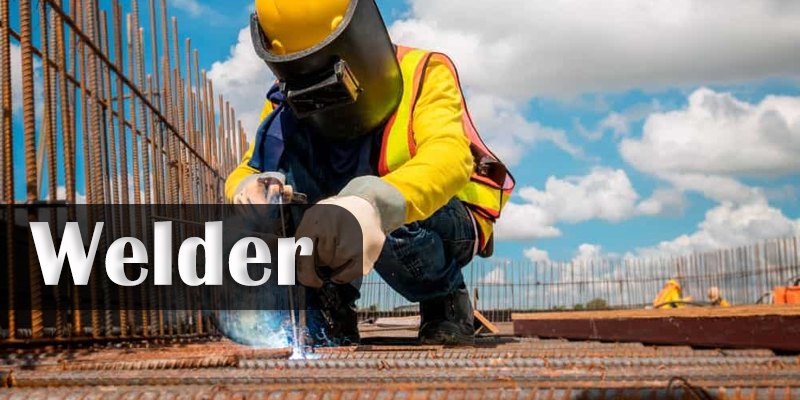
ITI Welder Trade Syllabus
The ITI Welder trade is a one-year vocational training program under the Craftsman Training Scheme (CTS), regulated by the National Council for Vocational Training (NCVT). This course trains individuals in welding techniques, safety practices, and metal fabrication to prepare them for careers as welders in industries such as manufacturing, construction, and automotive. The syllabus is divided into two semesters, each lasting six months, and includes theoretical knowledge, practical skills, and employability training.
Course Overview
- Duration: 1 Year (2 Semesters)
- Eligibility: Minimum 8th-grade pass (some institutes require 10th-grade pass with Science and Mathematics)
- Objective: To develop skilled welders proficient in gas and electric welding, capable of performing industrial welding tasks with precision and safety.
Syllabus Breakdown
1. Trade Theory (Theoretical Knowledge)
Covers the principles and concepts of welding and related processes.
Semester 1
- Introduction to Welding
- Importance of welding in industries.
- Types of welding: Gas, Arc, and Resistance welding.
- Roles and responsibilities of a welder.
- Welding Equipment and Tools
- Construction and working of welding transformers, generators, and rectifiers.
- Gas welding equipment: Regulators, hoses, torches, and nozzles.
- Electrodes: Types, functions, and coding (e.g., AWS standards).
- Safety Practices
- Occupational hazards in welding (fire, electric shock, fumes).
- Personal Protective Equipment (PPE): Welding helmets, gloves, aprons.
- Fire prevention and first aid for burns and injuries.
- Welding Processes
- Oxy-Acetylene welding and cutting: Principles and applications.
- Shielded Metal Arc Welding (SMAW): Basics and electrode selection.
- Metal properties: Ferrous and non-ferrous metals, effects of heat.
- Basic Metallurgy
- Weldability of metals: Steel, aluminum, copper.
- Effects of welding on metal structure (distortion, stress).
Semester 2
- Advanced Welding Techniques
- Gas Metal Arc Welding (GMAW/MIG): Equipment and process.
- Gas Tungsten Arc Welding (GTAW/TIG): Principles and applications.
- Plasma arc cutting and welding: Techniques and safety.
- Weld Imperfections
- Types of defects: Porosity, cracks, incomplete fusion.
- Causes and remedies for weld imperfections.
- Welding Positions
- Flat, horizontal, vertical, and overhead welding positions.
- Techniques for multi-pass welding.
- Inspection and Quality Control
- Visual inspection of welds.
- Use of gauges and non-destructive testing (NDT) basics.
- Industrial Applications
- Welding in fabrication, pipelines, and structural work.
- Reading welding symbols and blueprints.
2. Trade Practical (Hands-On Skills)
Focuses on developing practical welding expertise.
Semester 1
- Basic Welding Practice
- Setting up oxy-acetylene welding and cutting equipment.
- Performing straight cuts and bevel cuts on mild steel plates.
- Running beads with and without filler rods (gas welding).
- Arc Welding Skills
- Striking an arc and depositing straight beads using SMAW.
- Butt joints and lap joints in flat position.
- Fillet welds on mild steel plates.
- Safety Drills
- Proper use of PPE during welding operations.
- Handling gas cylinders and regulators safely.
- Practicing emergency procedures (e.g., fire extinguishing).
- Metal Preparation
- Cleaning and edge preparation of metal surfaces.
- Measuring and marking using steel rule, square, and punch.
Semester 2
- Advanced Welding Practice
- MIG welding: Butt, lap, and fillet joints on mild steel.
- TIG welding: Fusion welds on thin sheets (stainless steel, aluminum).
- Pipe welding: Single V-butt joints in horizontal position.
- Cutting Techniques
- Plasma arc cutting on various metals.
- Profile cutting of complex shapes on steel plates.
- Weld Testing
- Preparing test specimens for destructive testing (e.g., bend test).
- Identifying and correcting weld imperfections.
- Project Work
- Fabricating small structures (e.g., frames, grills) using welding techniques.
- Repairing worn-out metal components.
3. Workshop Calculation and Science
Provides mathematical and scientific foundations for welding.
- Measurements and Calculations
- Units of length, area, and volume relevant to welding.
- Calculating electrode consumption and welding time.
- Geometry
- Angles and shapes in welding joints (e.g., V-groove, fillet).
- Basic trigonometry for positioning welds.
- Science Concepts
- Heat transfer and its effects on metals.
- Properties of gases (oxygen, acetylene) used in welding.
4. Engineering Drawing
Teaches interpretation and creation of technical drawings.
- Basic Drawing Skills
- Use of drawing instruments: Scale, compass, protractor.
- Orthographic projections of simple objects.
- Welding Symbols
- Understanding welding symbols as per BIS/ISO standards.
- Sketching weld joints (butt, fillet, lap).
- Blueprint Reading
- Interpreting fabrication drawings for welding tasks.
- Drawing sectional views of welded assemblies.
5. Employability Skills
Enhances job-readiness and soft skills.
- Communication Skills
- Workplace communication with supervisors and peers.
- Writing basic reports on welding tasks.
- Workplace Skills
- Time management and teamwork in industrial settings.
- Basics of entrepreneurship for self-employment.
- IT Literacy
- Using computers for documentation and online resources.
- Introduction to welding simulation software.
Assessment and Certification
- Examinations: Conducted semester-wise with theory and practical components.
- Certification: Successful candidates receive the National Trade Certificate (NTC) from NCVT, recognized across India for employment and further training.
- Evaluation: Includes practical tests (e.g., weld quality), theory exams, and project assessments.
Career Opportunities
- Welders in manufacturing, construction, shipbuilding, and automotive industries.
- Opportunities as welding supervisors or inspectors with experience.
- Self-employment through fabrication workshops.
Notes
- The syllabus aligns with the latest NCVT guidelines and may vary slightly based on institute or state-specific requirements.
- For the most current version, refer to the Directorate General of Training (DGT) website (dgt.gov.in) or your local ITI